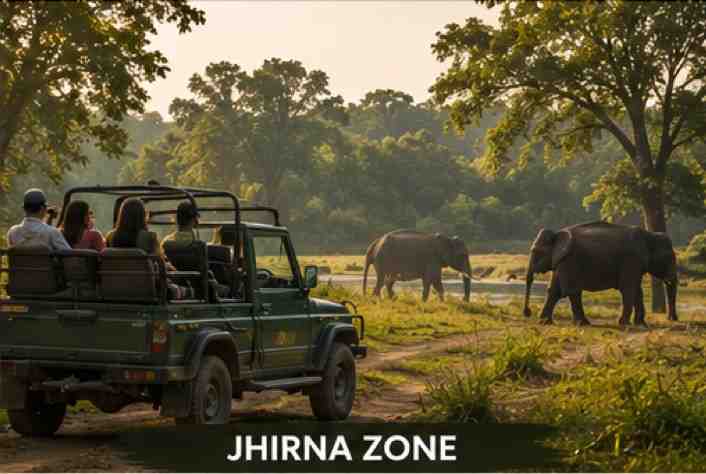
About Jhirna Zone
Jhirna is a dependable safari zone with mixed woodland, grassland edges, and year-round appeal when road and forest conditions permit.
It is best planned with confirmed permits, original photo IDs, registered gypsy, and a trained guide. Morning drives are usually preferred for cooler weather, while afternoon drives can be rewarding when animals move toward water and shade.
History And Tourism
Jhirna became a major tourism zone after village relocation and habitat restoration opened the landscape for regulated wildlife tourism. Its year-round popularity comes from practical access and varied habitat.
Like all Corbett safari areas, visitor movement is regulated to protect wildlife habitat and keep tourism within defined routes, gate timings, and guide-led systems.
Geography And Landscape
The terrain has scrub forest, mixed woodland, broad grass patches, and seasonal water bodies. It is useful for guests who want flexible safari planning and a steady forest drive experience.
The habitat supports typical Corbett wildlife such as spotted deer, sambar, wild boar, elephants, langurs, raptors, woodland birds, and occasional tiger or leopard movement depending on season and route.
Stay And Lodge Planning
Most guests stay outside the zone in Ramnagar, Dhela, or Dhikuli-side resorts. Safari entry is handled through the designated gate with registered gypsy and guide.
Choose accommodation based on gate distance, reporting time, road transfer, meal timing, and whether you want to combine safari with local sightseeing or a relaxed resort stay.
Opening, Closing And Safari Timing
Jhirna safari timing changes by season. Morning entries generally start around sunrise and afternoon entries shift later as daylight changes. Always follow the exact reporting time printed on the confirmed permit.
Final timings, open dates, and route access can change by official order. Carry the same original ID used for booking.
Best Time To Visit Jhirna
October to March is comfortable for families. April to June can be hot but productive for wildlife activity around water and shade.
How To Reach Jhirna Zone
Ramnagar is the main base. From there, guests travel toward Dhela Gate with permit, ID, guide, and gypsy coordination completed before entry.
- By road: Delhi to Ramnagar via Moradabad and Kashipur is the common approach.
- By train: Ramnagar railway station is the nearest practical railhead.
- By air: Delhi, Dehradun, and Pantnagar are commonly considered depending on flight availability.
Sample Jhirna Tour Itinerary
Short Safari Plan
Day 1: Arrive near Ramnagar, check in, confirm permit and pickup details, enjoy an afternoon safari if available.
Day 2: Early morning jeep safari, breakfast, check-out, and onward transfer.
Balanced Wildlife Plan
Day 1: Arrive, rest, and prepare documents for safari reporting.
Day 2: Morning safari, midday rest, optional second safari or local sightseeing.
Day 3: Relaxed breakfast and departure from Ramnagar.
Packing Tips For Jhirna
- Original photo ID used for safari booking.
- Muted clothing in olive, khaki, grey, brown, or dull green.
- Light jacket in winter and sun protection in summer.
- Binoculars, camera batteries, memory cards, and lens cloth.
- Personal medicines, water bottle, and a small soft backpack.
- Avoid loud music, bright clothes, plastic litter, and strong perfumes.
Rules And Practical Notes
Remain seated in the vehicle, follow the guide, avoid feeding wildlife, keep noise low, and do not step down inside the forest unless the guide confirms a permitted point.