
A Forest Shaped By Rivers And Hills
Jim Corbett National Park sits in the lower Himalayan foothills of Uttarakhand, where the plains of North India begin to rise into sal forest, river valleys, stony streams, and open grasslands. For many travellers it is their first real introduction to the wild side of India, yet the park never feels like a simple checklist destination. Its charm comes from movement and contrast: mist over the Ramganga River at sunrise, deer calling from a forest edge, elephants crossing a dry riverbed, a kingfisher flashing blue over water, and the sudden silence that falls when the jungle senses a predator nearby.
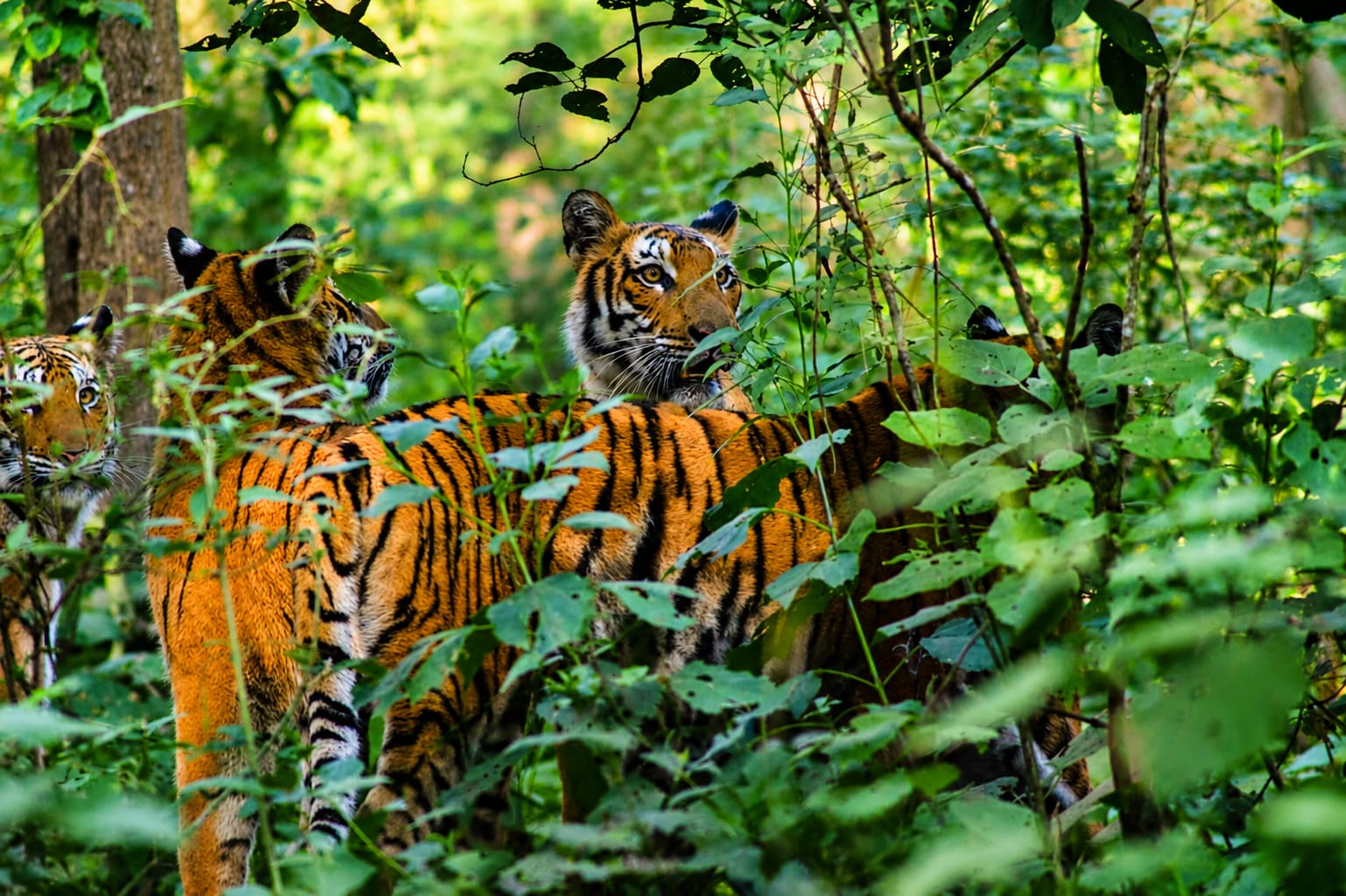
The park is closely associated with the legacy of hunter, naturalist, and writer Jim Corbett, whose stories helped shape public imagination around the forests of Kumaon. Over time, the region became a symbol of India's conservation efforts, especially for tiger protection. Today, visitors come not only for the possibility of seeing a tiger, but also for the experience of entering one of the country's most atmospheric forest systems. Corbett rewards patient travellers. The forest may show a tiger in the first hour, or it may ask guests to slow down and notice tracks, alarm calls, fresh pugmarks, birdlife, elephant movement, and the way light changes across the trees.
Habitats That Keep The Jungle Alive
One of the park's great strengths is its variety of habitats. Dense sal woodland creates cool, shaded corridors where spotted deer, sambar, wild boar, and langur move through layered greenery. Wider grasslands open the view and make the landscape feel almost cinematic, especially in Dhikala, where the forest meets riverine flats and distant hills. Seasonal streams cut through the terrain, bringing moisture and wildlife activity to otherwise dry patches. The Ramganga and its connected water bodies support fish, crocodiles, otters, waterbirds, and countless smaller species that are easy to miss when the focus remains only on large mammals.
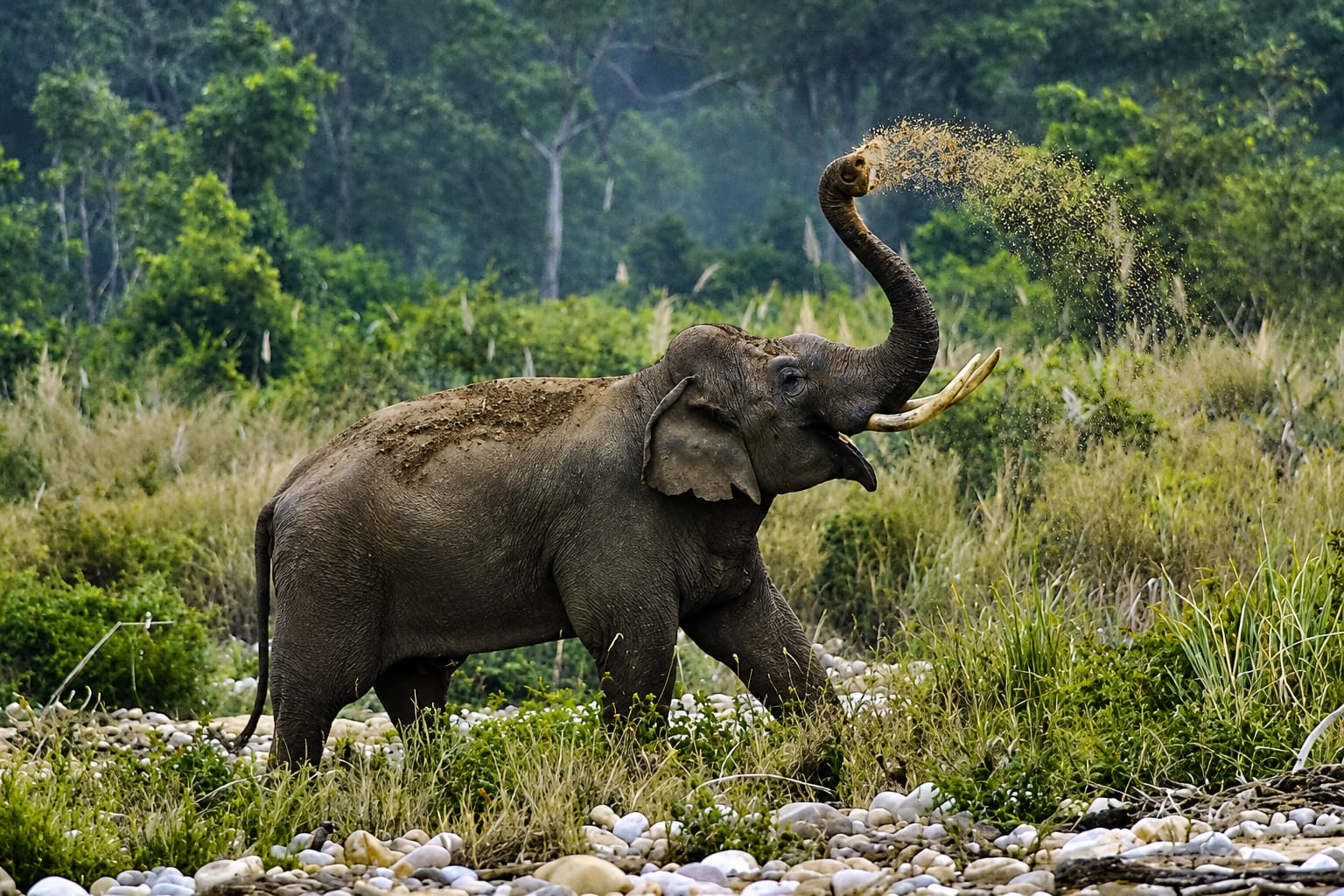
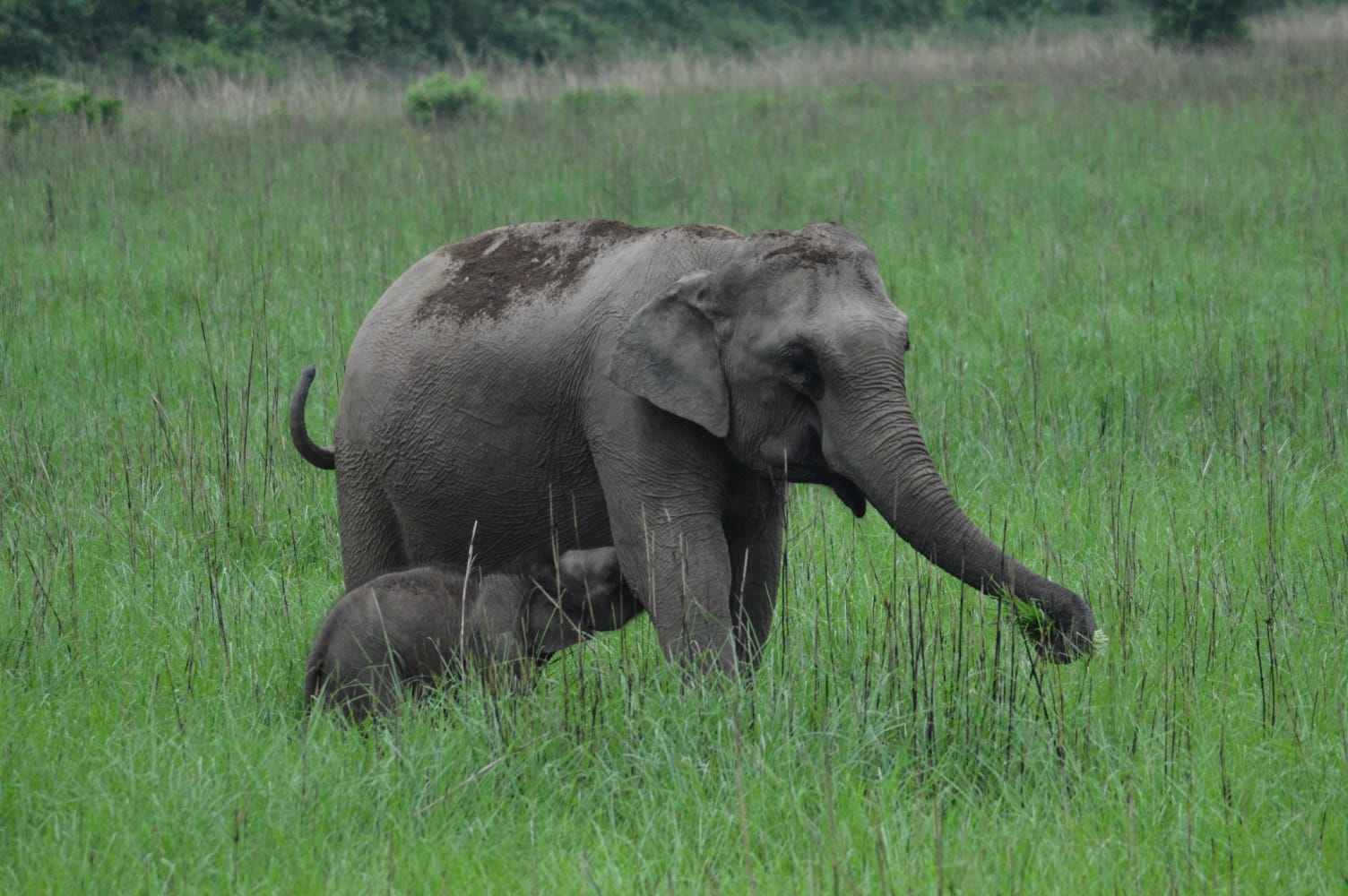
The tiger is the headline species, but Corbett is not a one-animal forest. Asian elephants are one of its most memorable presences. Watching a herd feed calmly near a river, protect its calves, or move through tall grass can be as powerful as any tiger sighting. Leopards, though more secretive, live across the landscape and are sometimes seen on quieter routes or rocky edges. Jackals, jungle cats, yellow-throated martens, gharials, mugger crocodiles, monitor lizards, and many species of deer and primates add depth to the experience. The birdlife is especially rich, making the park rewarding for guests who enjoy slower observation. Hornbills, eagles, owls, woodpeckers, bee-eaters, lapwings, kingfishers, parakeets, and winter migrants all add colour and sound to the safari.
Safari Zones And Forest Reading
Safaris in Corbett are organized through defined tourism zones, each with its own personality. Dhikala is known for wide views, forest rest houses, river landscapes, and a deep wilderness feel. Bijrani is popular for its mixed forest and strong wildlife movement. Jhirna and Dhela offer accessible routes with varied habitat and year-round interest, while Durga Devi is appreciated by birdwatchers and guests who enjoy hillier forest character. Garjia and other buffer experiences add more options for travellers based in Ramnagar or nearby resorts. The right zone often depends on season, permit availability, guest expectations, travel dates, and the kind of forest experience someone wants, so local planning makes a real difference.
The best way to enjoy Corbett is to treat the safari as a complete forest experience rather than a guaranteed sighting exercise. A good naturalist will read the jungle like a story. Fresh tracks on dust, the direction of a langur's call, the mood of deer at a meadow, drag marks near water, or the sudden flight of birds can all reveal what has happened before the vehicle arrived. Some mornings are dramatic, with clear predator movement and high excitement. Others are quiet and beautiful, offering soft light, bird activity, elephant herds, and the rare pleasure of being present in a protected landscape before the day becomes busy.
Seasons, Stays, And Responsible Travel
Season changes the park's character. Winter mornings can be cold and misty, with golden light and excellent birding. Spring brings clearer visibility and active wildlife movement around water. Summer can be intense, but it often improves chances of seeing animals near rivers and waterholes. The monsoon refreshes the forest, deepens the green, and supports the wider ecosystem, though core tourism access is planned around official forest schedules and safety conditions. Because routes, timings, and zone access depend on forest department rules, guests benefit from planning early and staying flexible.
For many visitors, Corbett is also about where the safari day begins and ends. A comfortable stay near Ramnagar, a forest lodge atmosphere, a quiet riverside resort, or a family-friendly hotel can shape the whole holiday. Early starts feel easier when transfers are smooth, meals are planned around safari timing, and the itinerary leaves space to rest between drives. Families often enjoy a balance of safaris, gentle nature walks around permitted areas, river views, local food, and relaxed evenings. Photographers may prefer multiple drives in carefully chosen zones. First-time guests may need help understanding permits, ID requirements, reporting times, gates, and realistic travel distances.
Responsible travel is central to the Corbett experience. The forest is not a theme park; it is home to wild animals, local communities, forest staff, guides, drivers, and fragile natural systems. Keeping distance from wildlife, avoiding loud behaviour, respecting route rules, not littering, and listening to guides are simple habits that protect both guests and the park. A safari becomes more meaningful when visitors understand that every sighting is a privilege, not a performance arranged on demand.
What makes Jim Corbett National Park special is this mix of accessibility and wildness. It is close enough for families, couples, photographers, and weekend travellers to plan comfortably, yet deep enough to feel mysterious even after many visits. A single trip may offer a tiger sighting, a riverside elephant herd, rare birds, quiet forest roads, and conversations with people who know the land intimately. That is why travellers return. Corbett does not reveal itself all at once; it invites guests to come back, look again, and discover another layer of the forest.